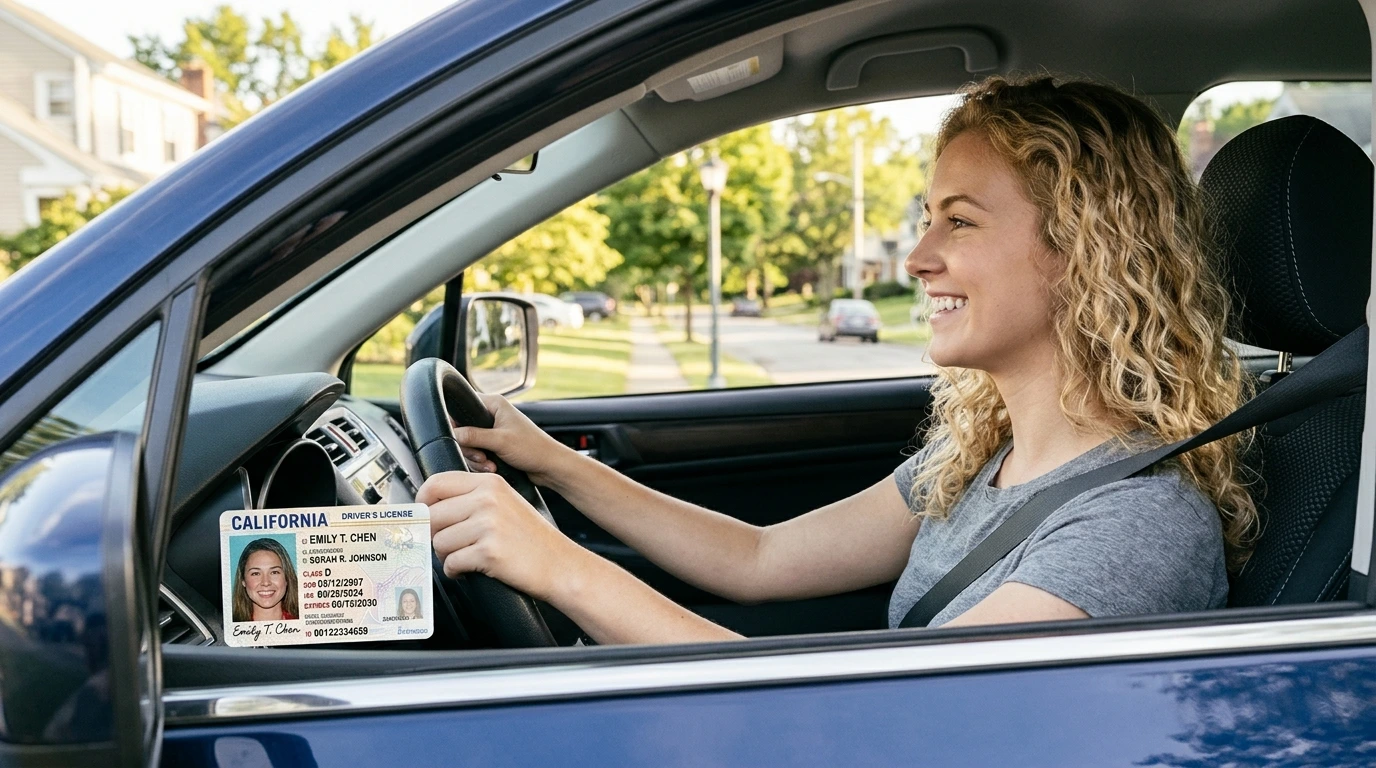
How to Pass Your DMV Road Test on the First Try 2026
Taking your practical driving test can feel intimidating, but passing on your first attempt comes down to preparation and knowing exactly what the examiner is looking for. Whether you are getting your first driver’s permit, upgrading to a full license, or preparing for a retake, minor mistakes can make the difference between a pass and a fail.
In this ultimate guide, we break down the DMV road test checklist, common automatic fail mistakes, and essential driving maneuvers you must master before test day.
What Do DMV Examiners Look for on a Road Test?
During your road test, the driving evaluator evaluates your vehicle control, safety awareness, and responsiveness to real-time traffic rules.
Examiners score your driving based on five main categories:
Vehicle Handling: Smooth acceleration, controlled braking, and proper steering control (9-and-3 or 10-and-2 hand position).
Observation & Blind Spots: Looking over your shoulder before changing lanes or pulling away from the curb.
Speed Management: Staying at or slightly below the posted speed limit—especially in school and residential zones.
Traffic Rules & Signals: Obeying stop signs, traffic lights, lane markings, and right-of-way rules.
Maneuver Precision: Successfully executing parking, reversing, and turnarounds without hitting curbs or obstacles.
Pre-Test Vehicle Inspection Checklist
Before your road test begins, your vehicle must pass a mandatory safety inspection at the test site. If your car fails inspection, your test will be canceled automatically.
Make sure your test vehicle has:
Valid Registration & Proof of Insurance: Printed physical cards in your glove compartment.
Working Exterior Lights: Functional headlights, high beams, brake lights, hazards, and turn signals.
Intact Windshield & Mirrors: No major cracks blocking the driver’s line of sight; adjustable side and rear-view mirrors.
Proper Tire Tread & Inflation: Adequate tread depth with no visible damage or warning lights on the dashboard.
Operational Seatbelts & Horn: Fully functioning safety restraints for both driver and passenger.
The 4 Essential Driving Maneuvers You Must Master
1. Parallel Parking
Parallel parking remains one of the most stressful parts of the road test, but practice makes it straightforward:
Signal early as you approach the space.
Align your rear bumper with the vehicle next to you.
Check your mirrors and blind spots before backing in.
Avoid striking the curb hard (touching the curb lightly to gauge distance is often permitted, but mounting the curb is an automatic fail).
2. Three-Point Turn (K-Turn)
Used to turn your vehicle around on narrow residential streets:
Check traffic in both directions and activate your turn signal.
Pull across to the opposite curb, shift into reverse, and look over your shoulder while backing up.
Shift back into drive and complete the turn into your lane smoothly.
3. Smooth Stopping & Starting
Avoid abrupt or "jerky" stops. Ease your foot off the gas early when approaching a stop sign or red light, applying gradual brake pressure. Always bring the vehicle to a full stop behind the limit line or crosswalk.
4. Reversing in a Straight Line
Examiners will ask you to back up smoothly for roughly 30 to 50 feet:
Place your right arm over the back of the passenger seat.
Look directly out the rear window rather than relying strictly on backup cameras or side mirrors.
Maintain a steady, slow pace in a straight line.
Top 5 Automatic Fail Mistakes to Avoid
Understanding what causes an immediate test failure helps you avoid critical errors:
Disregarding Stop Signs: Rolling through a stop sign ("California stop") without coming to a complete zero-mph stop.
Speeding in Restricted Zones: Going even 1-2 mph over the limit in school zones or work zones.
Failing to Yield Right-of-Way: Causing another vehicle or pedestrian to slow down or alter their path due to your movement.
Dangerous Driving or Near-Collisions: Forcing the examiner to intervene, touch the wheel, or step on the instructor brake.
Lack of Blind Spot Checks: Changing lanes or reversing without turning your head to check your blind spots.
Final Tips for Road Test Day
Arrive Early: Reach the DMV testing center 15–20 minutes ahead of your scheduled time to complete paperwork without feeling rushed.
Exaggerate Your Head Movements: Examiners cannot always see your eyes moving; physically move your head when checking mirrors and blind spots.
Stay Calm If You Make a Small Error: Losing points for a minor mistake (like parking slightly far from the curb) does not mean you failed. Focus on the remaining steps and finish strong.
Ready to Get Your License?
Preparing for your permit exam or behind-the-wheel road test requires the right resources. Explore FullPermit.com for state-by-state licensing guides, practice materials, and essential driver checklists to help you pass with confidence!